
Trauma Steals Our Safety and Youth - But Not Forever
As if we already don’t have enough to handle with having been sexually victimized, we also have to deal with advanced aging. Yes, it’s true! The trauma we’ve endured impacts our bodies in such a way that it triggers an increase in the amount of the related chemicals and hormones that age us.
The prolonged exposure to these chemicals and hormones creates both chronic inflammation and oxidative stress that damages our cells. It’s this damage that causes us to age faster. Hormones and chemicals such as cortisol, catecholamine and inflammatory cytokines negatively impact the way we feel, our mobility, and how we look. And, let’s be honest, we’ve noticed and felt these changes.
Whether it’s weight gain, (more) wrinkles, dry skin, pain in our bodies, hair loss, saggy/crepey skin…we’re probably noticing that we look older. In other words, we’re “looking like what we’ve been through”. Noticing these changes in physical appearance is probably adding more stress and probably aging us even more. The bad news is…it’s happening. The good news is…there are things we can each do to minimize, if not “reverse” these changes.
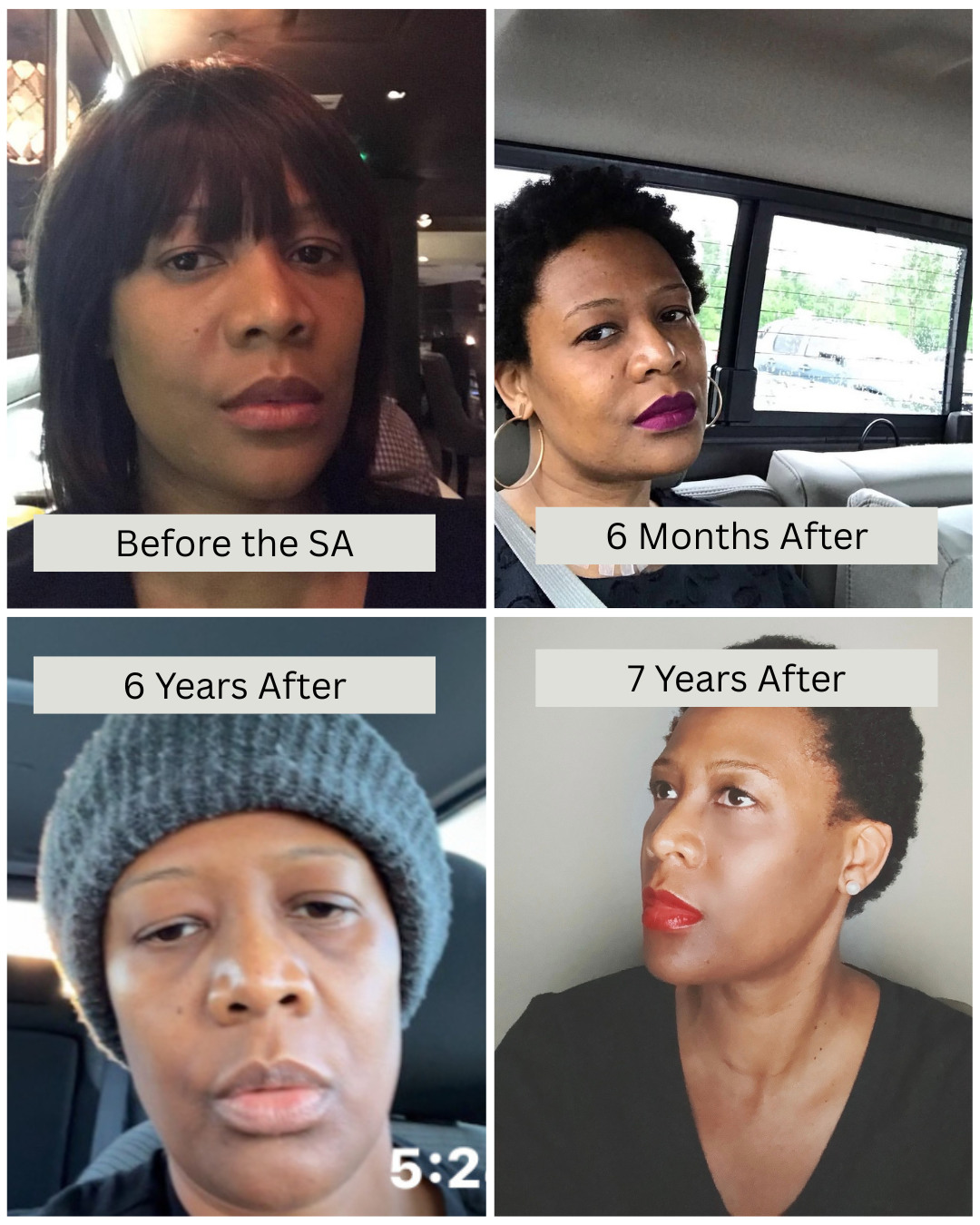
TL Robinson, GOTU Founder & CEO, shares how trauma from the sexual assault she endured in 2018 impacted her physical appearance over the last 7 years.
Below are techniques or habits that members of the GOTU community have adopted to address the trauma induced premature aging:
daily breathing exercises
periodic facial massage / lymphatic drainage
daily light exercise (e.g. brisk walking, stretching, chair aerobics, etc.)
participate in activities (coloring, playing video games like Tetris or Block Crush!, puzzles)
self care routine (daily cleansing and moisturizing with periodic exfoliation)
Please note that each of the above approaches isn’t professional advice and this list doesn’t replace advice from trained and credentialed mental health and medical professionals. However, it has provided some benefits.
By practicing the above techniques or habits, GOTU community members reported having plumper skin, less hair loss, improved ability to sleep, less bodily pain with improved mobility, shinier skin and less swelling in their bodies. Members also shared that these changes improved both their mental health and emotional wellness. The more members practiced, the greater they felt (over longer periods of time).
We each may have been harmed and showing the effects of that harm, but we aren’t helpless. Being informed is the largest part of the trauma induced premature aging battle. Next, we must create and practice a routine that gives our bodies what they need to counteract it.
Living Beyond™ Together
Every story shared, every perspective offered, and every conversation started helps change how we understand sexual violence and improve our survivorship journeys.
What would you add to this discussion?
Leave a comment below and join the discussion.
If this article helped you or gave you a new perspective, please share it with someone who may benefit from reading it. Together, we can create more understanding, more compassion, and a world where survivors are never expected to heal in silence.
— The GOTU Community